
CFFE Qualification: Building Experts in Fraud Detection and Prevention
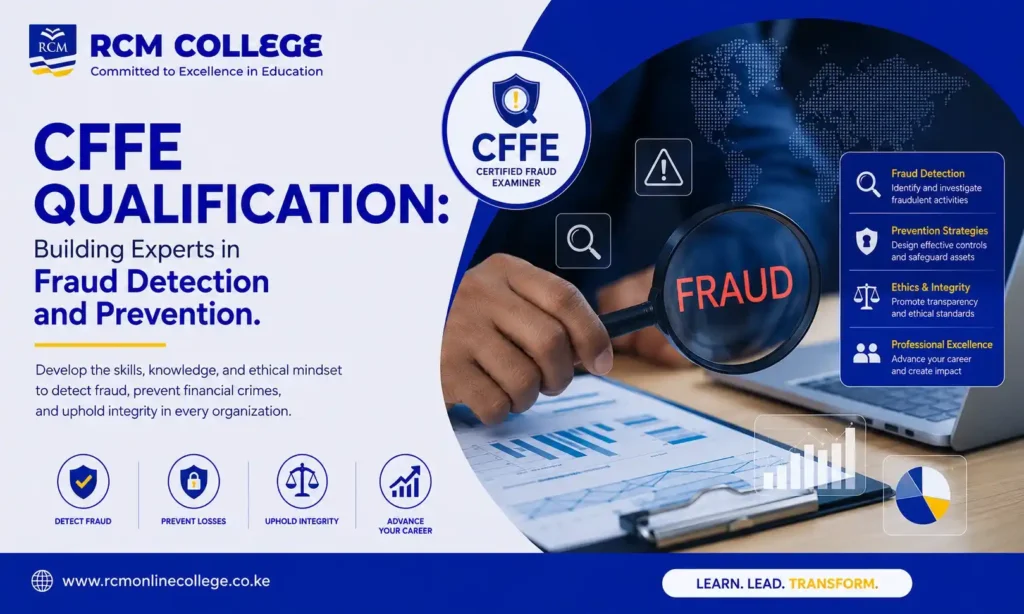
Fraud has become one of the biggest challenges facing organizations, governments, and financial institutions today. From cyber crime and financial manipulation to corruption and embezzlement, fraud continues to evolve in complexity and scale. As a result, there is a growing demand for skilled professionals who can detect, investigate, and prevent fraudulent activities. One of the most effective ways to gain these skills is through the Certified Forensic Fraud Examiner (CFFE) qualification.
The CFFE qualification equips learners with specialized knowledge in fraud examination, forensic accounting, investigation techniques, and financial crime prevention. It prepares professionals to safeguard organizations, protect public resources, and uphold integrity in both the public and private sectors.
What is the CFFE Qualification?
The KASNEB (Kenya Accountants and Secretaries National Examinations Board CFFE qualification is a professional certification designed for individuals interested in fraud investigation and forensic auditing. The course combines accounting, law, auditing, criminology, and investigative skills to help professionals identify and combat fraud effectively.
The qualification is suitable for:
- Accountants and auditors
- Finance professionals
- Investigators and detectives
- Compliance officers
- Risk management professionals
- Internal auditors
- Public sector employees
- Business managers
- Recent graduates interested in forensic accounting
Why Fraud Detection and Prevention Matters
Fraud can cause significant financial losses, damage reputations, and weaken public trust. Organizations around the world lose billions of dollars annually due to fraudulent activities. Without proper systems and trained professionals, detecting fraud can become extremely difficult.
Fraud detection and prevention are important because they help:
- Protect organizational assets
- Promote transparency and accountability
- Reduce financial losses
- Strengthen internal controls
- Improve investor and public confidence
- Support legal compliance
- Enhance ethical business practices
Professionals trained in forensic fraud examination play a critical role in helping institutions prevent financial crimes before they escalate.
Key Areas Covered in the CFFE Qualification
The CFFE qualification provides comprehensive training in several important areas, including:
-
Fraud Investigation Techniques
Learners are trained on how to investigate suspicious financial activities, gather evidence, conduct interviews, and prepare investigation reports.
-
Forensic Accounting
This area focuses on analyzing financial records to uncover hidden fraud, financial irregularities, and accounting manipulation.
- Fraud Risk Management
Students learn how to identify fraud risks and implement systems that minimize opportunities for fraud.
-
Cyber Fraud and Digital Investigations
With the rise of technology-related crimes, the qualification also introduces learners to cyber fraud detection and digital forensic techniques.
-
Legal and Ethical Frameworks
Professionals are taught the legal procedures involved in fraud cases as well as the ethical responsibilities required in investigations.
-
Internal Controls and Compliance
The course emphasizes the importance of strong internal controls and regulatory compliance in preventing fraud.
Benefits of Pursuing the CFFE Qualification
Holding a CFFE qualification demonstrates expertise, integrity, and commitment to ethical professional standards. The qualification gives learners practical and analytical skills needed to detect fraud and investigate financial crimes effectively. Employers highly value professionals who can help organizations reduce financial risks and strengthen accountability systems.
Enhanced Career Opportunities
The demand for fraud examination professionals continues to grow across industries. The qualification opens opportunities in:
- Banks and financial institutions
- Government agencies
- Audit firms
- Insurance companies
- NGOs and international organizations
- Corporate organizations
- Investigative agencies
Who Should Study the CFFE Qualification?
The CFFE qualification is ideal for individuals who:
- Have an interest in financial investigations
- Want to specialize in forensic accounting
- Work in audit or compliance departments
- Wish to advance their accounting or finance careers
- Are passionate about promoting accountability and transparency
Even fresh graduates can benefit from the qualification by developing niche skills that increase competitiveness in the job market.
Reach out to the RCM Online College help desk for more information.


Responses